 VASTWARD
Module 4 / Lesson 15 of 2436 min
Member
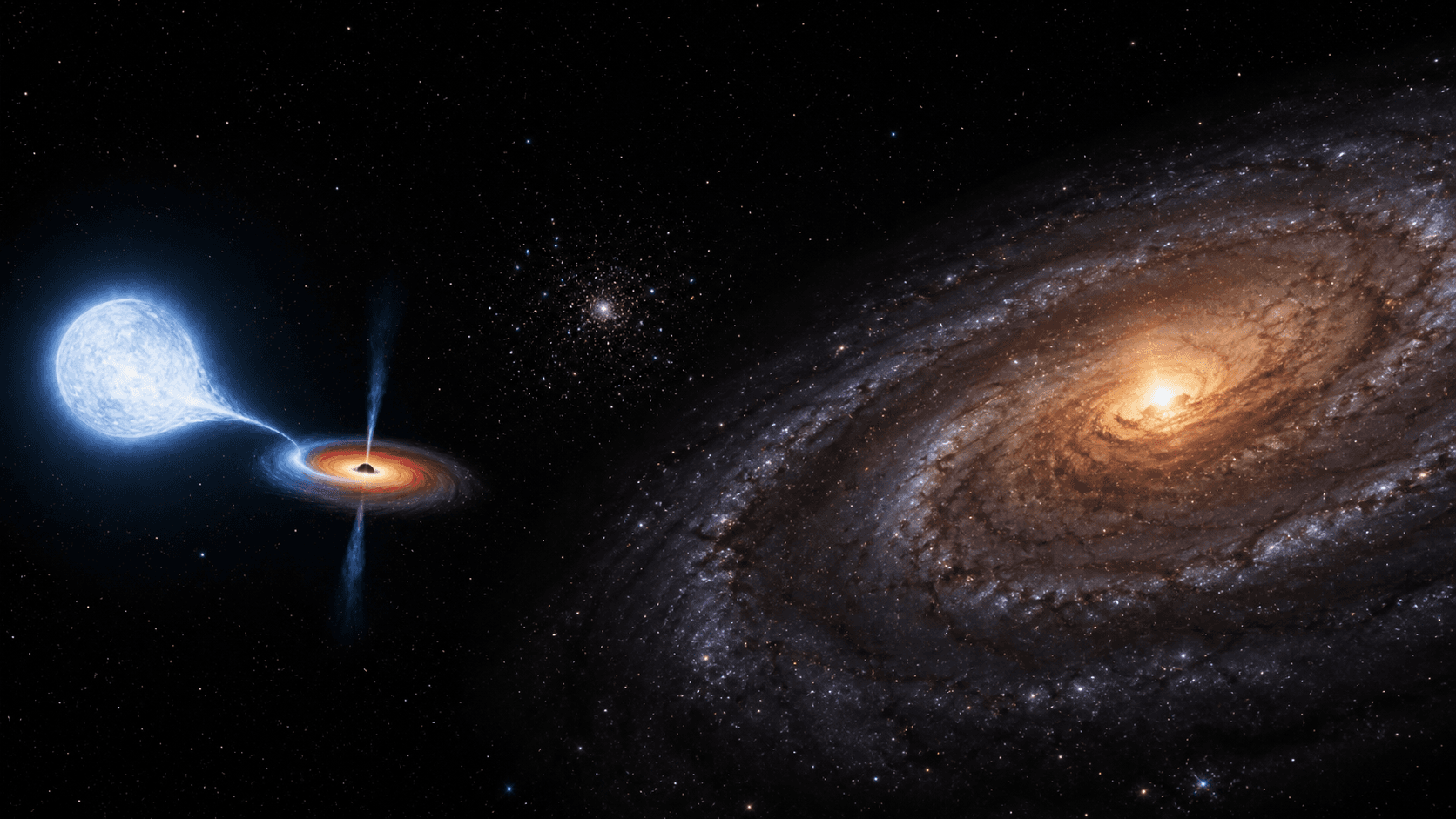
What Separates Stellar-Mass and Supermassive Black Holes?
How do mass, environment, feeding, and formation history change the system we observe?
You defined M☉, scaled a model horizon diameter, separated binaries from galactic nuclei, treated intermediate-mass objects as a difficult candidate population, and recognized quasar as an activity state.
Continue with full Academy access
This Lesson belongs to the complete route. Its title and learning question remain visible, while the explanation, lab, and debrief open with Academy membership.
Full Lesson includes
- Step-by-step bilingual explanation
- Interactive model or evidence lab
- Sources, checkpoint, and saved reflection