
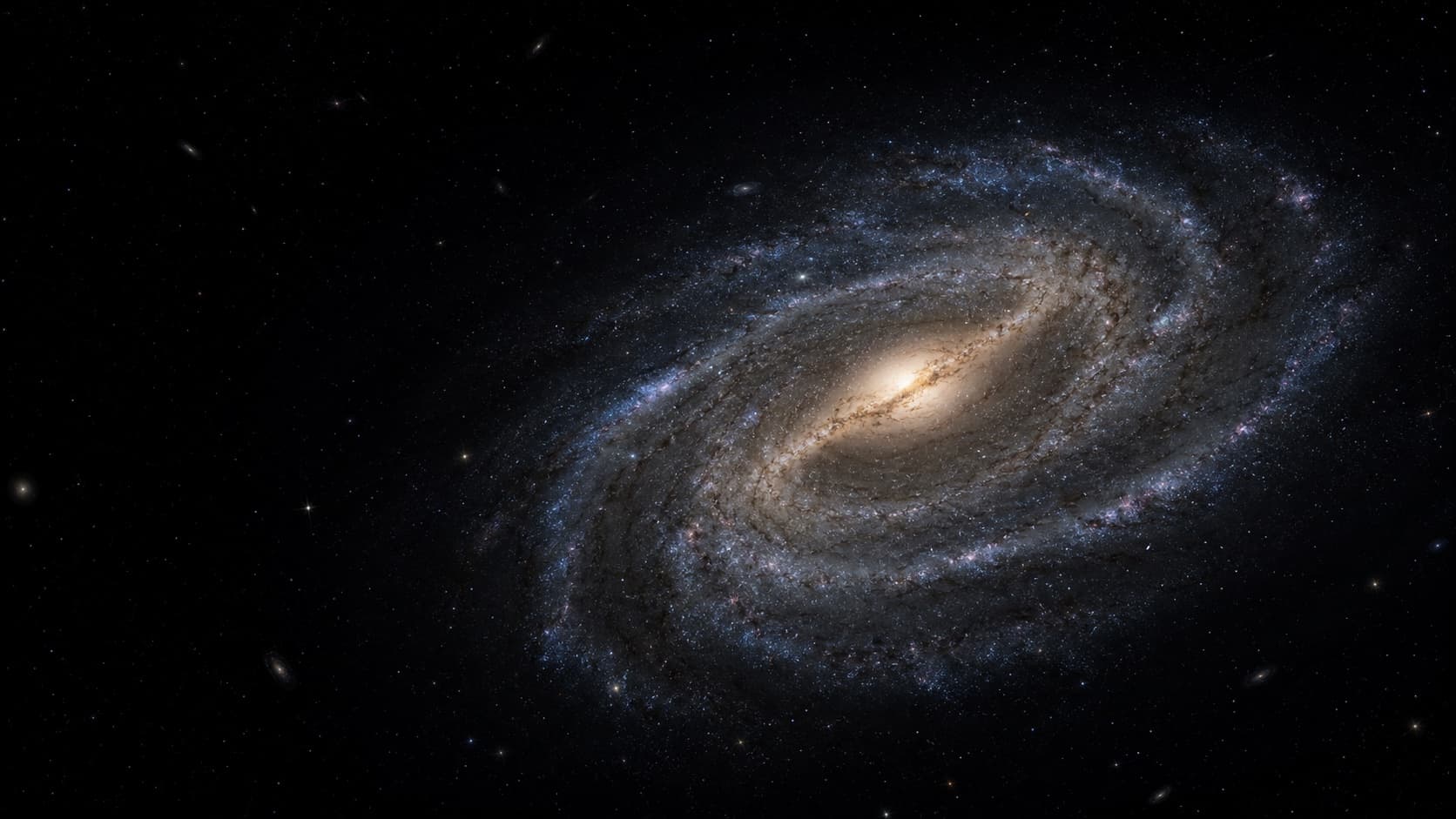
 About 100,000 light-yearsRoute mappedMilky WayOur barred spiral galaxy, including stellar nurseries, star clusters, remnants and the galactic centre.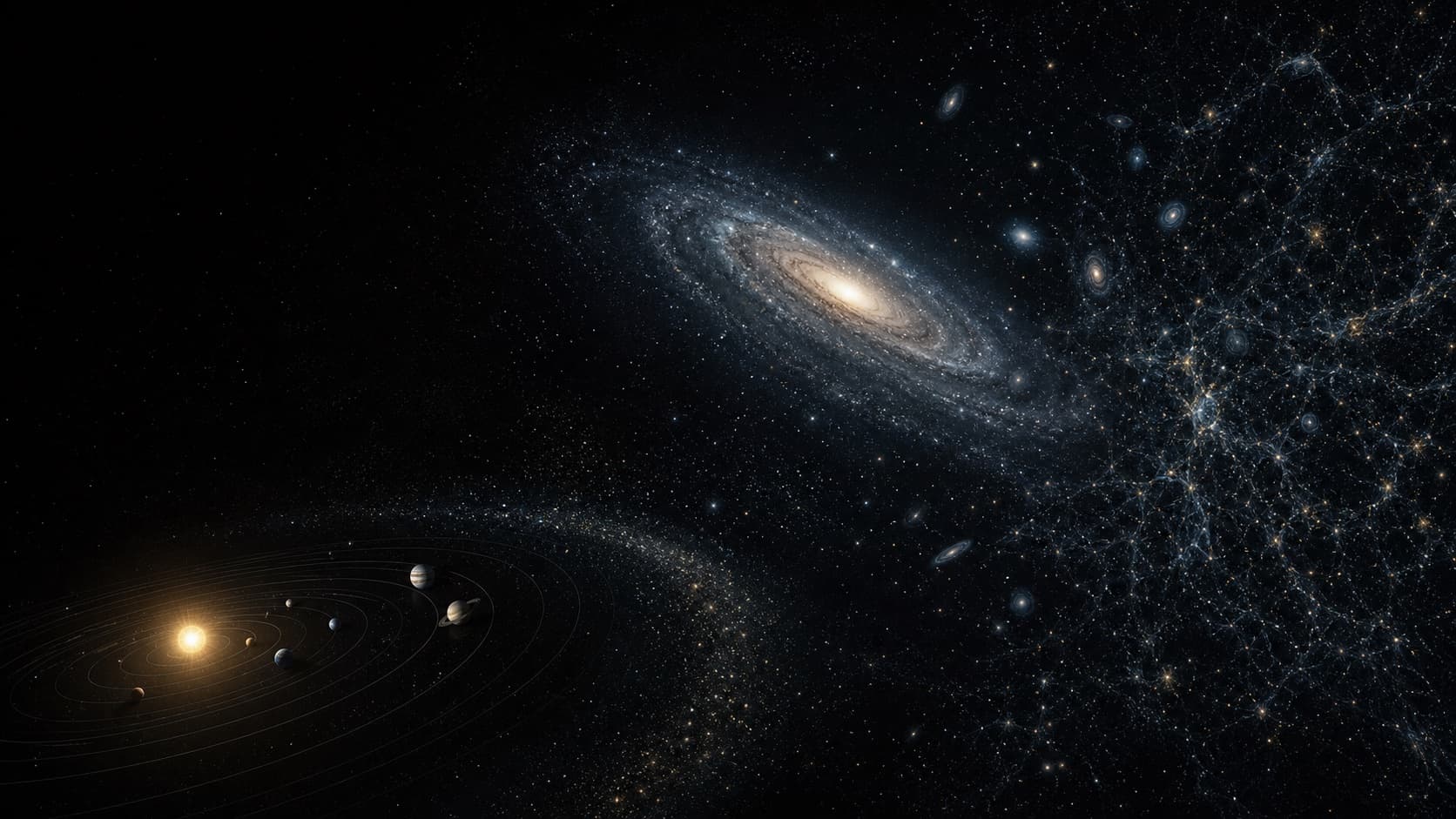
Celestial Atlas
A map for the observable universe
Start nearby, then widen the scale. Every profile connects what an object is with where it belongs.Move outward by scale
Use location when your question begins with where. The route widens from planetary distances to the large-scale universe.
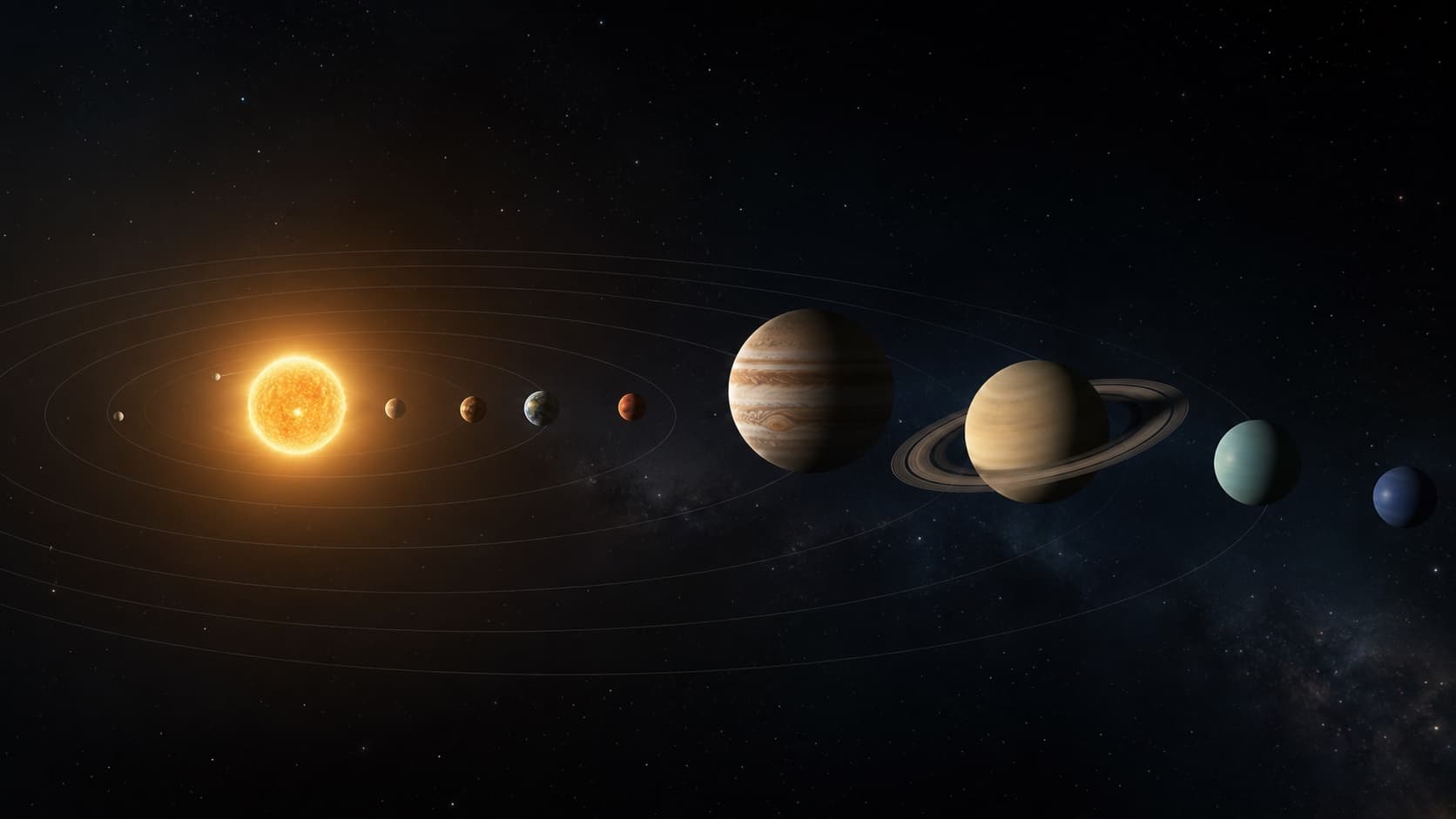 Astronomical unitsOpen nowSolar SystemThe Sun, planets, moons, dwarf planets, comets and small bodies held within our planetary system.Enter regionAbout 100,000 light-yearsRoute mappedMilky WayOur barred spiral galaxy, including stellar nurseries, star clusters, remnants and the galactic centre.
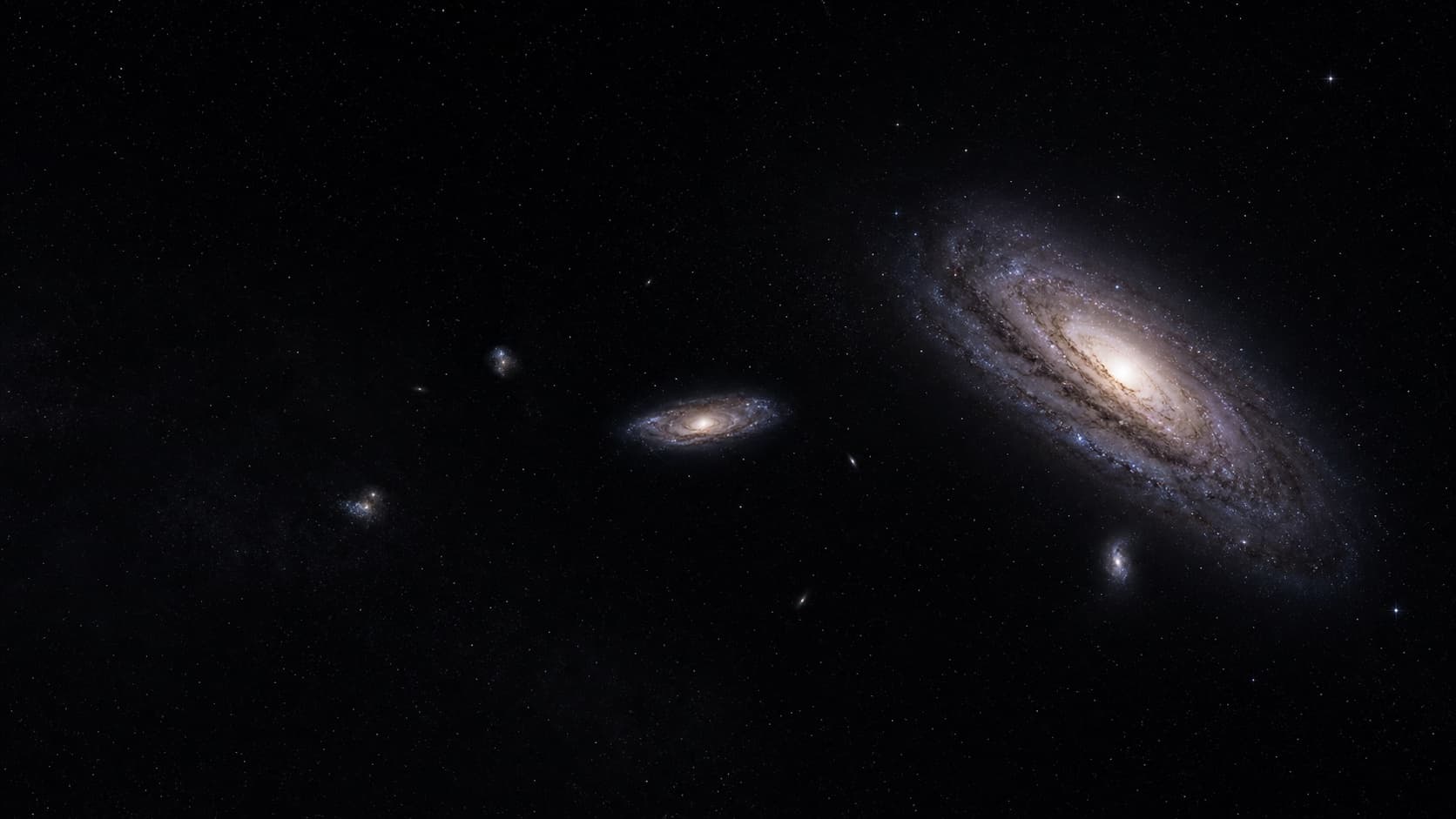 Millions of light-yearsRoute mappedGalactic neighbourhoodThe Milky Way, Andromeda, Triangulum and their smaller companions within the Local Group.
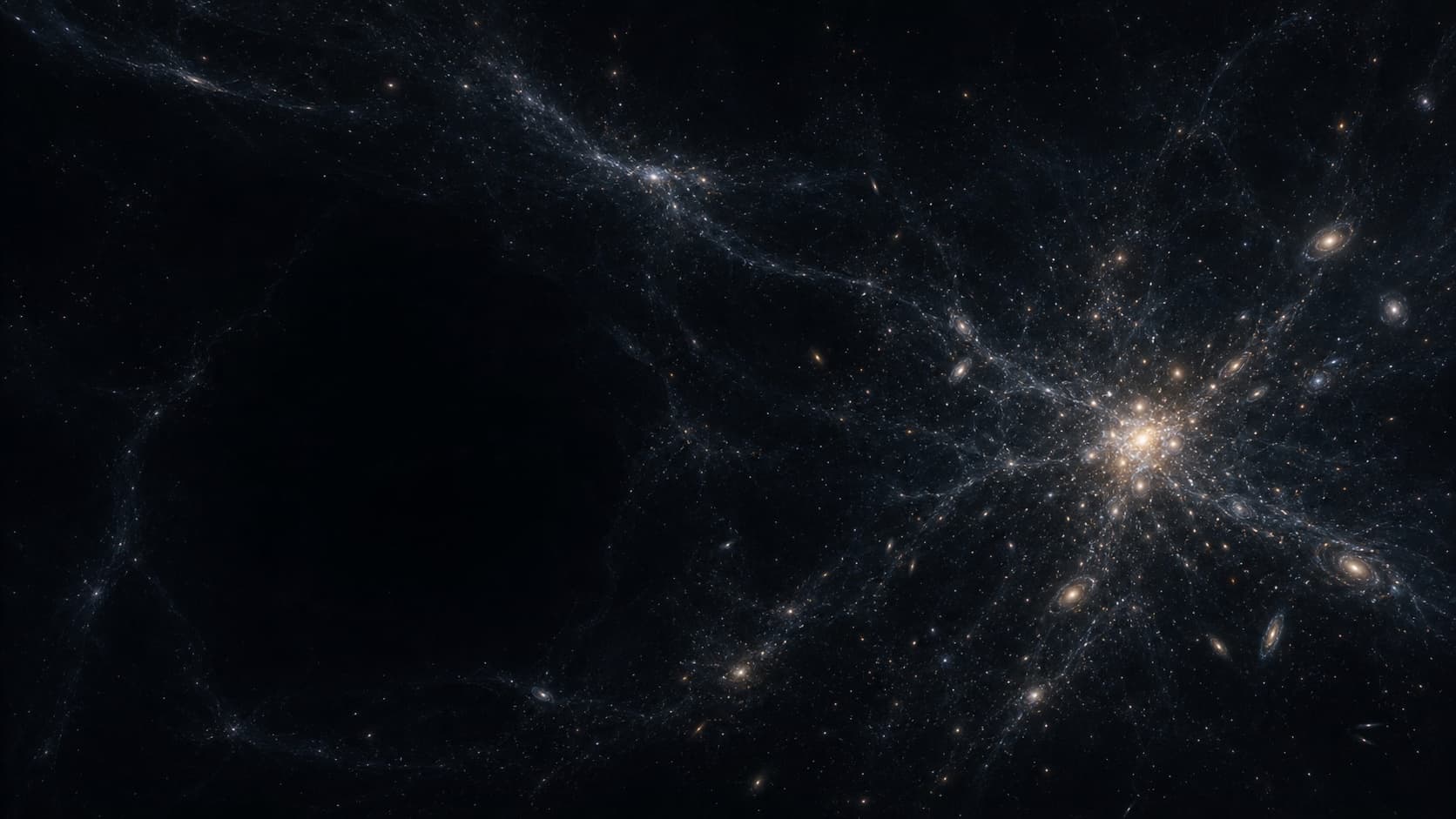 Billions of light-yearsRoute mappedDeep universeGalaxy clusters, vast voids and the filamentary structure that emerges across the observable universe.
Mapped routes remain closed until their first evidence-led profiles are ready.
Find an object by what it is
Use object family when you are looking for a planet, star, nebula, black hole or galaxy without starting from a location.
- Worlds and moonsPlanets, dwarf planets and natural satellites
Compare surfaces, atmospheres, interiors, orbits and the histories that shaped different worlds.
Index planned - Stars and stellar systemsSingle, binary and multiple-star systems
Follow how mass, composition and age shape a star from formation to its final state.
Index planned - Exoplanet systemsWorlds orbiting stars beyond the Sun
Inspect how transits, stellar motion and spectra reveal planets too distant to visit.
Index planned - Nebulae and stellar nurseriesEmission, reflection, dark and remnant nebulae
Explore clouds where stars form, dying stars shed material and shock waves reshape gas and dust.
Index planned - Compact objectsWhite dwarfs, neutron stars, pulsars and black holes
Understand matter under extreme gravity and how astronomers detect objects that may emit little or no light.
Index planned - GalaxiesSpiral, elliptical, irregular and interacting galaxies
Compare immense systems of stars, gas, dust and dark matter across cosmic time.
Index planned - Cosmic structuresGroups, clusters, superclusters, filaments and voids
Pull the view back far enough to see how matter forms the large-scale architecture of the universe.
Index planned
One object, two ways to find it
Region and object family are navigation paths, not duplicate content. Each celestial object keeps one canonical evidence record.
Sagittarius A* belongs to the Milky Way and can be reached from the galactic-centre route.
The same record also appears under compact objects, inside the black-hole family.
36
Search available profilesEvidence-led profiles are ready to inspect
The current core covers the Sun, eight planets, the Moon, five officially recognized dwarf planets and a first group of scientifically important moons. Search them together or begin with the Solar System route.